
Quick Overview
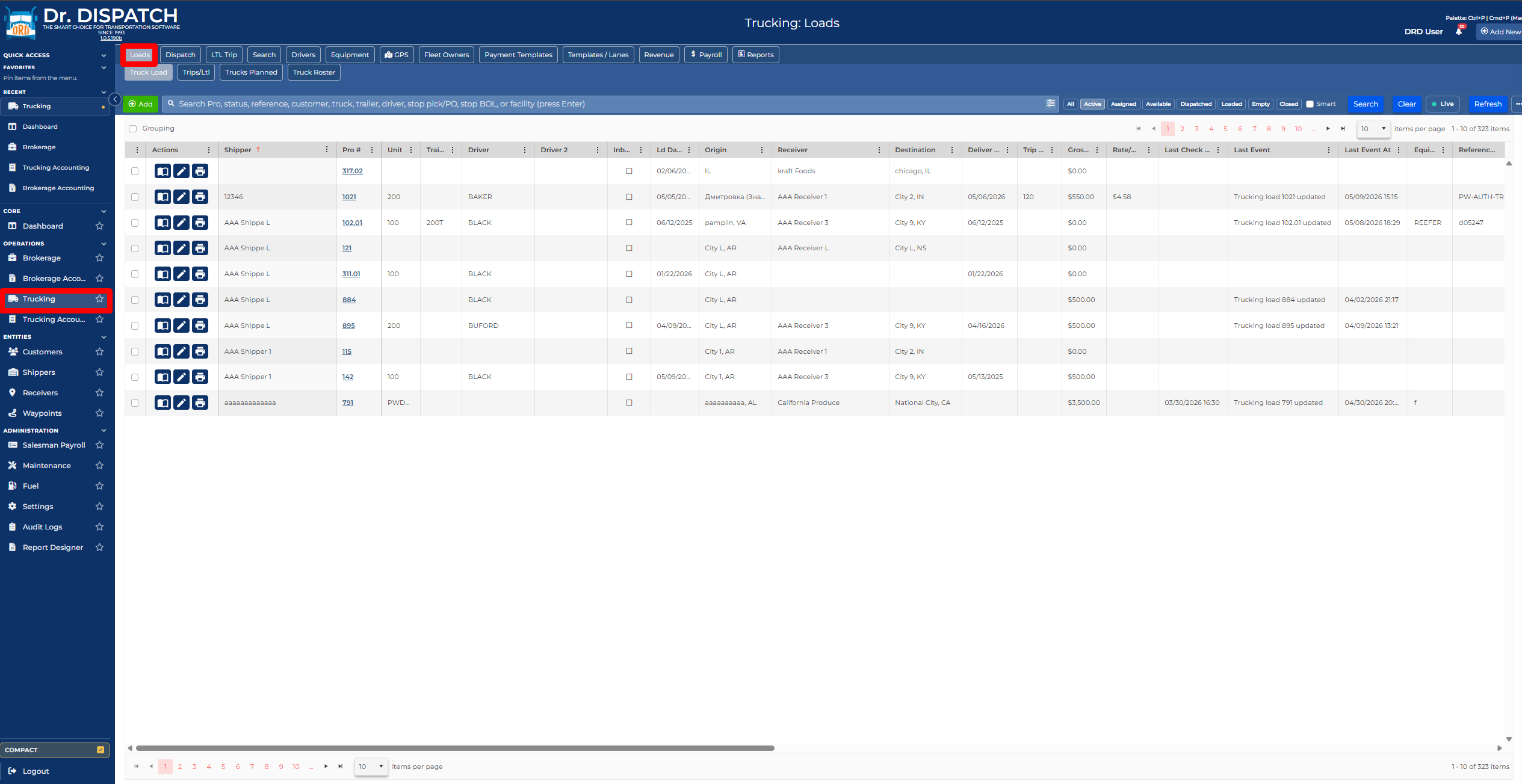
In Trucking, most day-to-day work starts in Trucking > Loads or Trucking > Dispatch.
- Use Loads when you want a board view with filters, tabs, print forms, and quick access to existing loads.
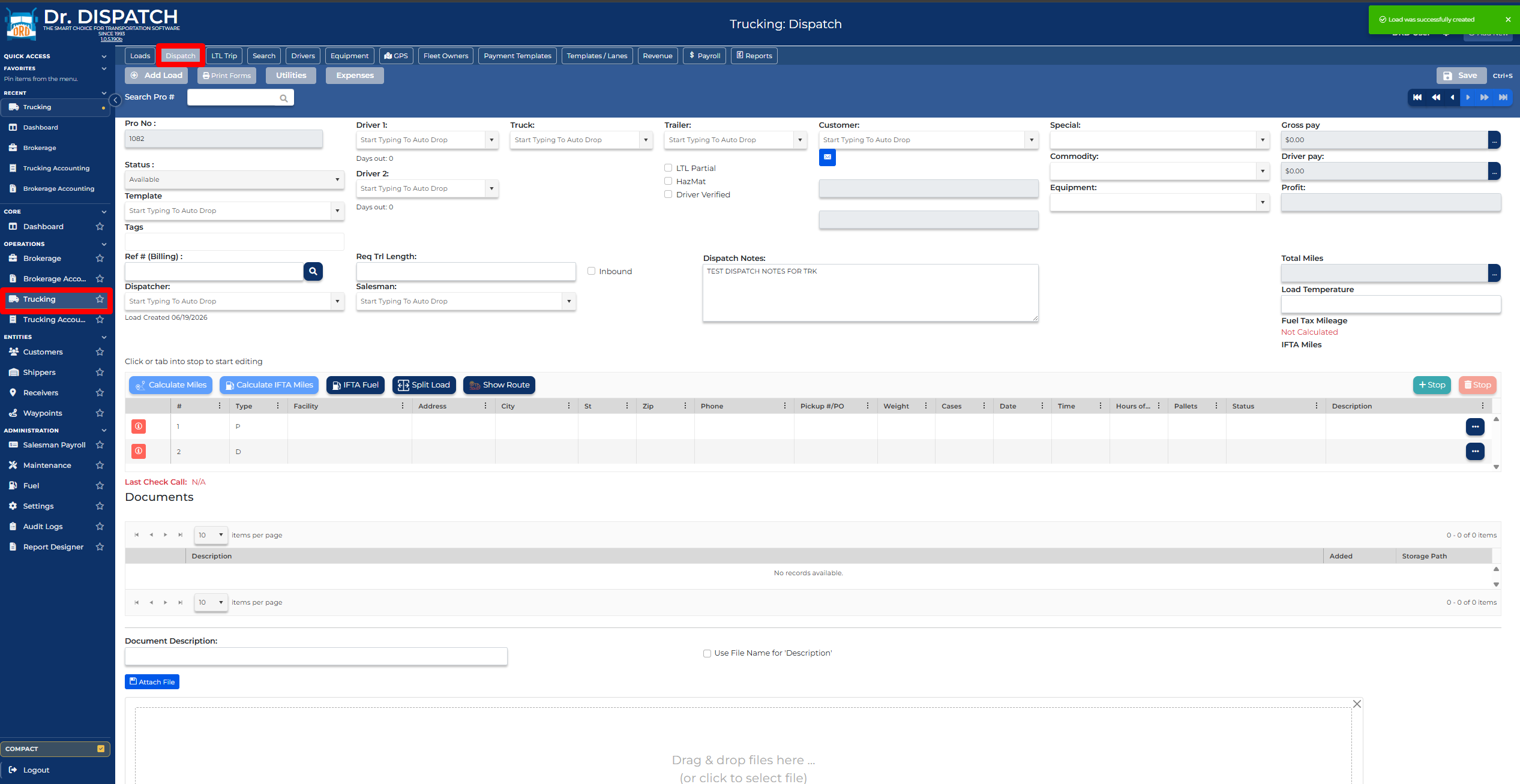
- Use Dispatch when you want to work through loads one at a time, add a new load, save changes, print forms, or enter trip expenses.
- Use Invoicing, A/R - Accounts Receivable, and Payroll after the load is ready for accounting.
Before You Start
Make sure these records exist or are ready to create:
- Customer
- Truck or unit
- Driver or drivers
- Trailer, if used
- Shipper and receiver, or pickup and delivery location details
- Customer rate, gross pay, miles, and driver pay setup
Your company settings may require certain fields before a load can be dispatched or invoiced. Common required fields include customer reference number, QuickBooks class, customer, gross pay, truck/unit, driver, and pickup or delivery information.
Create a Trucking Load
- Go to Trucking > Dispatch or Trucking > Loads.
- Click Add Load or Add.
- Enter the customer.
- Assign the truck or unit.
- Assign the driver or drivers.
- Enter trailer information if needed.
- Enter the pickup and delivery stops. Include dates, city, state, and full addresses when available.
- Enter reference details such as customer reference, BOL, pickup number, PO, or stop reference numbers.
- Enter the customer rate, gross pay, miles, fuel surcharge, and additional rate lines as needed.
- Review driver pay or payment template details if your company calculates driver pay from the load.
- Add dispatcher, salesperson, notes, documents, and other load details as needed.
- Click Save.
What Happens When You Assign a Unit
A new trucking load starts as Available. When you assign a truck or unit, the system can move the load to Assigned. That means the load has equipment attached but has not necessarily been dispatched yet.
Depending on company settings, assigning a truck may also help select or confirm the driver.
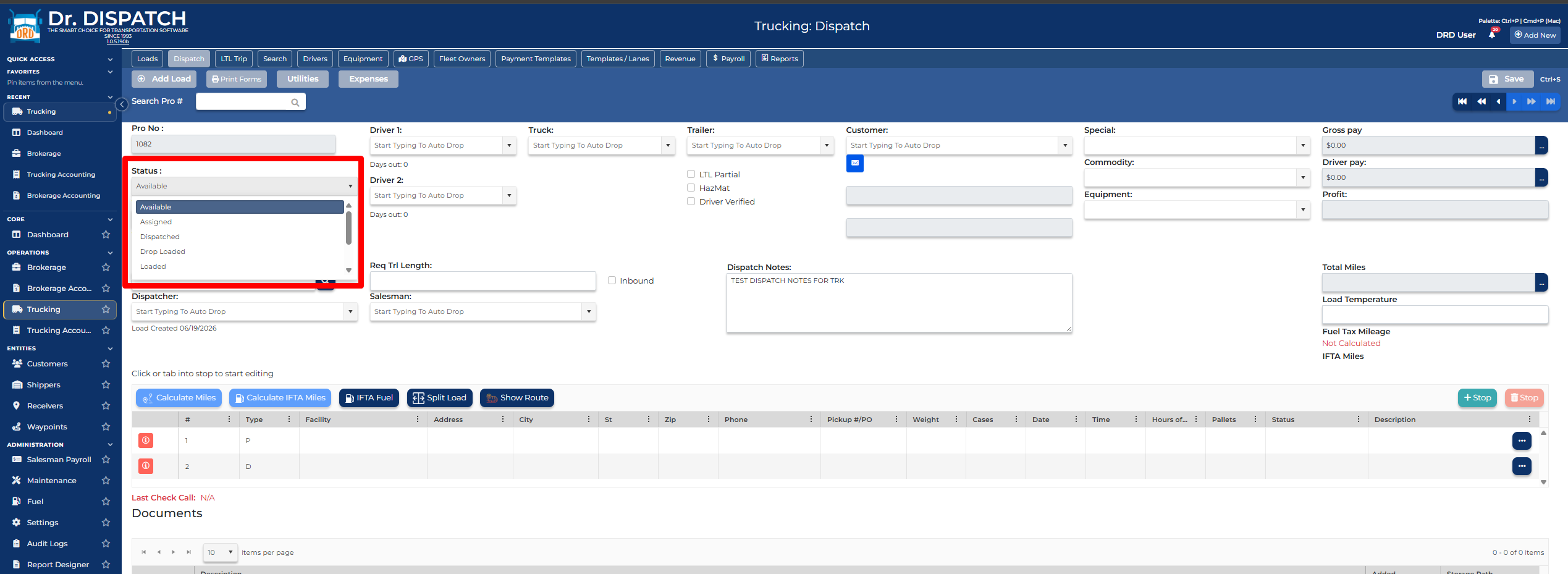
Trucking Load Statuses
The normal trucking status flow is:
Available -> Assigned -> Dispatched -> Drop Loaded / Loaded -> Docked -> Empty -> Closed
Not every load uses every status. For example, some companies may use Drop Loaded for dropped trailers or split/cross-dock workflows, while a simpler load may move from Dispatched to Loaded, then Empty, then Closed.
Status Meanings
| Status | Meaning |
|---|---|
| Available | The load exists but is not assigned to a truck or unit. |
| Assigned | A truck or unit is assigned, but the load is not dispatched yet. |
| Dispatched | The driver or unit has been dispatched on the load. |
| Drop Loaded | The trailer/load is loaded and dropped, often used for drop or split workflows. |
| Loaded | The freight has been picked up or loaded. |
| Docked | The load is at the dock, often used after loaded/drop-loaded activity. |
| Empty | The freight has been delivered and the truck/trailer is empty. |
| Closed | The operational side of the load is complete. |
Status Rules and Common Blockers
If the system will not let you change a status, review the message on screen. These are the most common reasons:
- To mark a load Assigned, a unit must be assigned.
- To mark a load Dispatched, the load usually must already be Assigned.
- Dispatch may require a driver, customer, gross pay, customer reference number, QuickBooks class, and pickup/drop information depending on your company settings.
- Loaded normally follows Dispatched or Drop Loaded.
- Docked normally follows Loaded or Drop Loaded.
- Empty normally follows Dispatched, Drop Loaded, Loaded, or Docked.
- Closed normally follows Empty or Drop Loaded.
Some settings can also calculate driver pay when a load reaches a selected status, such as Dispatched, Loaded, Empty, or Closed.
Work From the Trucking Load Board
Go to Trucking > Loads for a board-style view of loads.
From this screen, you can:
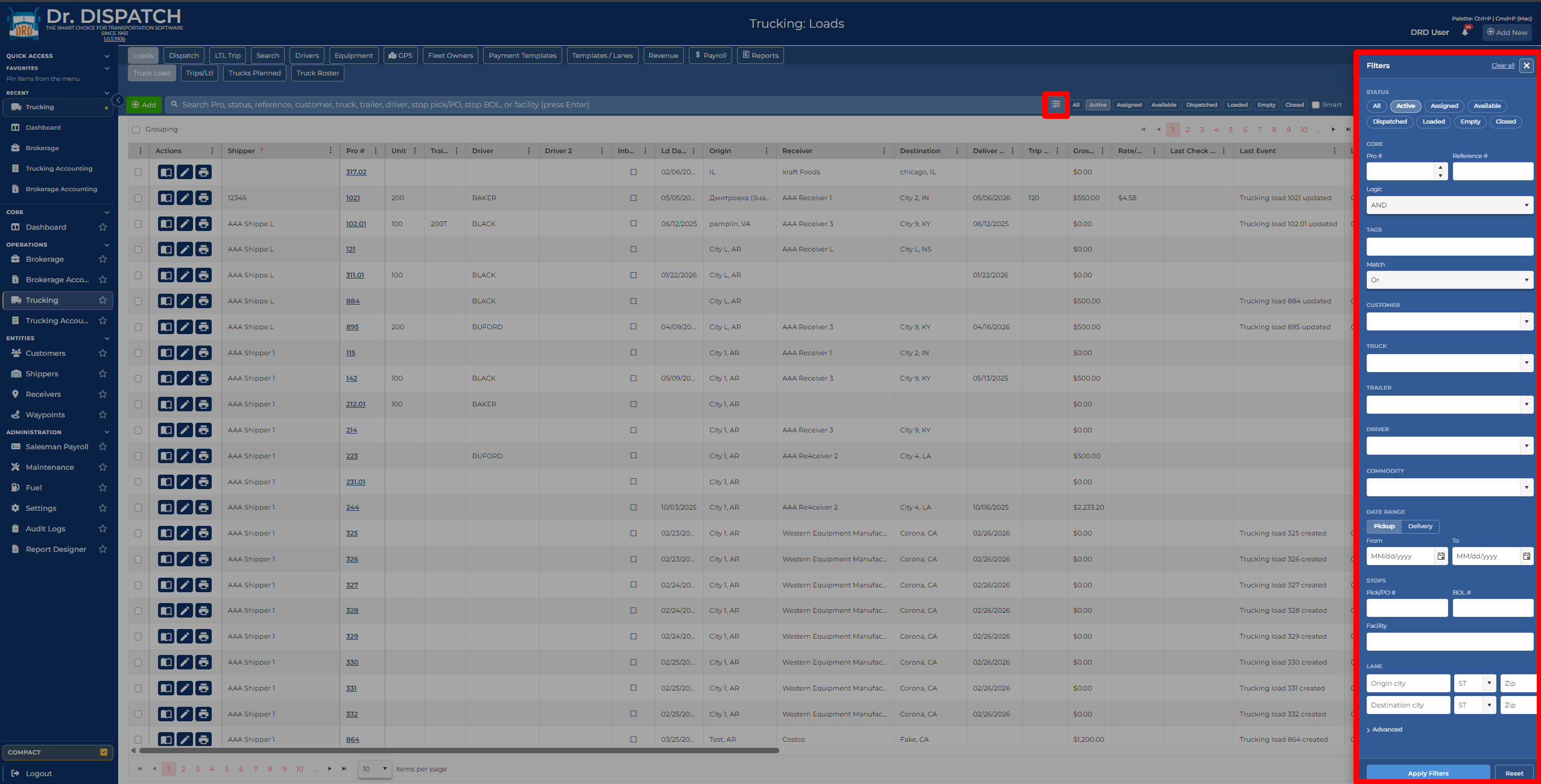
- Filter by status, Pro #, reference, customer, truck, trailer, driver, origin, destination, BOL, stop reference, and dates.
- Click a Pro # to open the load.
- Use the Truck Load tab for normal load board work.
- Use other tabs such as truck planning, trucks planned, and truck roster when your workflow needs them.
- Print forms from the grid.
- Use Add Bulk Orders when your company is entering multiple loads at once.
- Review driver verification fields if your company uses driver verification.
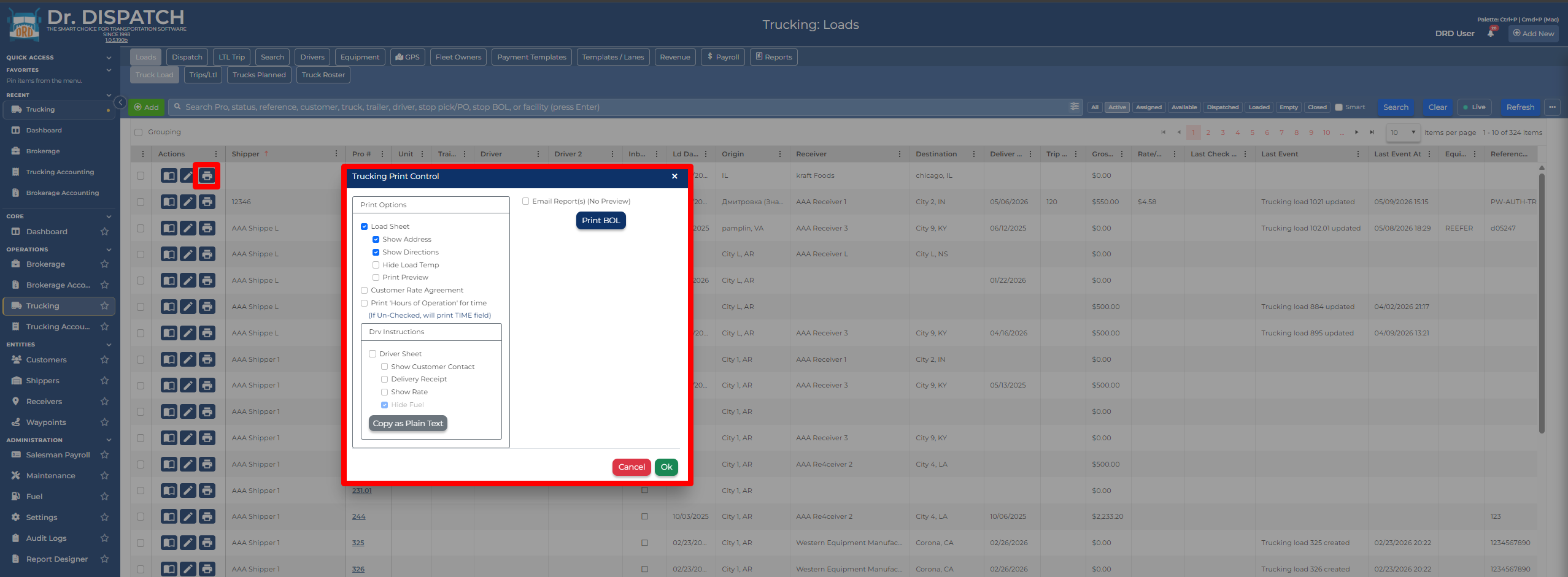
Print or Email Trucking Forms
From the load form or the load board, use Print Forms to generate documents such as:
- Customer rate confirmation
- Bill of lading
- Load sheet
- Driver load sheet
The load form also includes email options for customer communication when email is configured. Driver settlement email is handled from Payroll after a settlement is created.
Invoice Trucking Loads
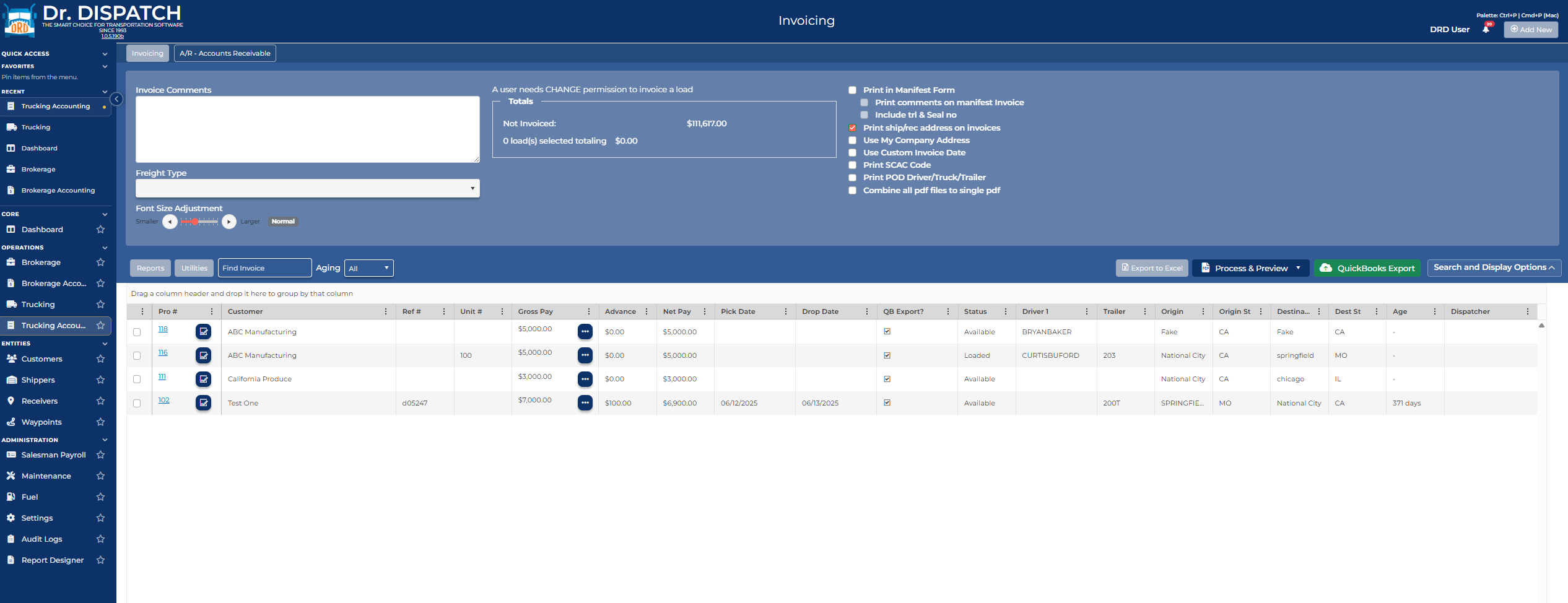
When the load is ready to bill the customer, go to Trucking > Invoicing.
- Go to Trucking > Invoicing.
- Review the grid for loads ready to invoice.
- Select the load or loads to invoice.
- Choose invoice options such as invoice comments, freight type, manifest options, shipper/receiver address, custom invoice date, POD information, or combined PDF.
- Click Process Invoices.
- If QuickBooks is active, use QuickBooks Export when you are ready to send invoice data to QuickBooks.
- Some companies only allow closed loads to be invoiced. If a load does not appear, confirm the load status and company invoicing preferences.
- A user needs the correct change/edit permission to invoice a load.
- The invoice date and invoiced-by information will show on the load after invoicing.
Post Customer Payments in A/R
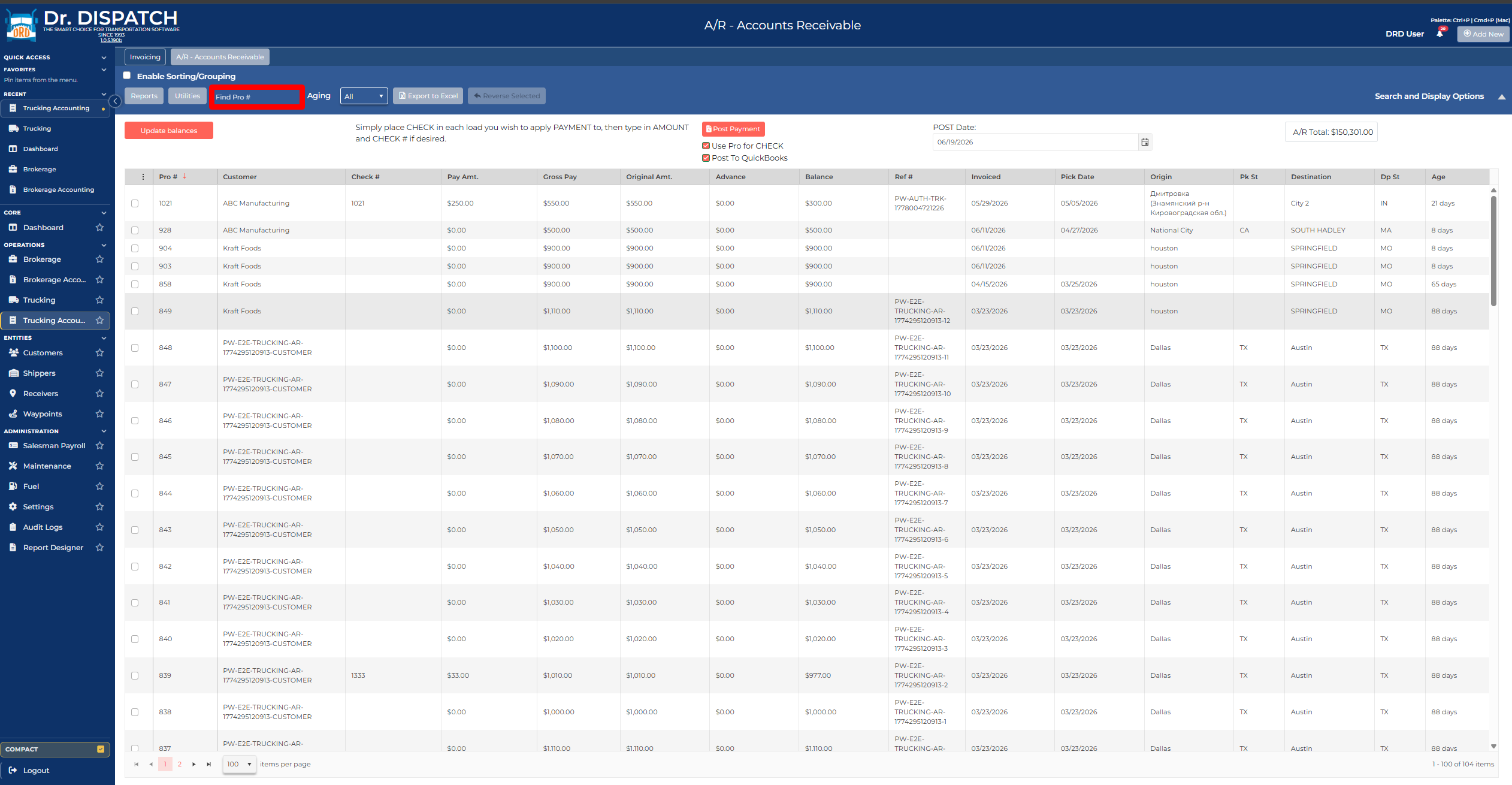
After customers pay invoices, go to Trucking > A/R - Accounts Receivable.
- Go to Trucking > A/R - Accounts Receivable.
- Find the load by Pro # or use the grid filters.
- Check the load or loads you want to apply payment to.
- Enter the payment amount and check number if needed.
- Choose the POST Date.
- If QuickBooks is active and your workflow uses it, select Post To QuickBooks.
- Click Post Payment.
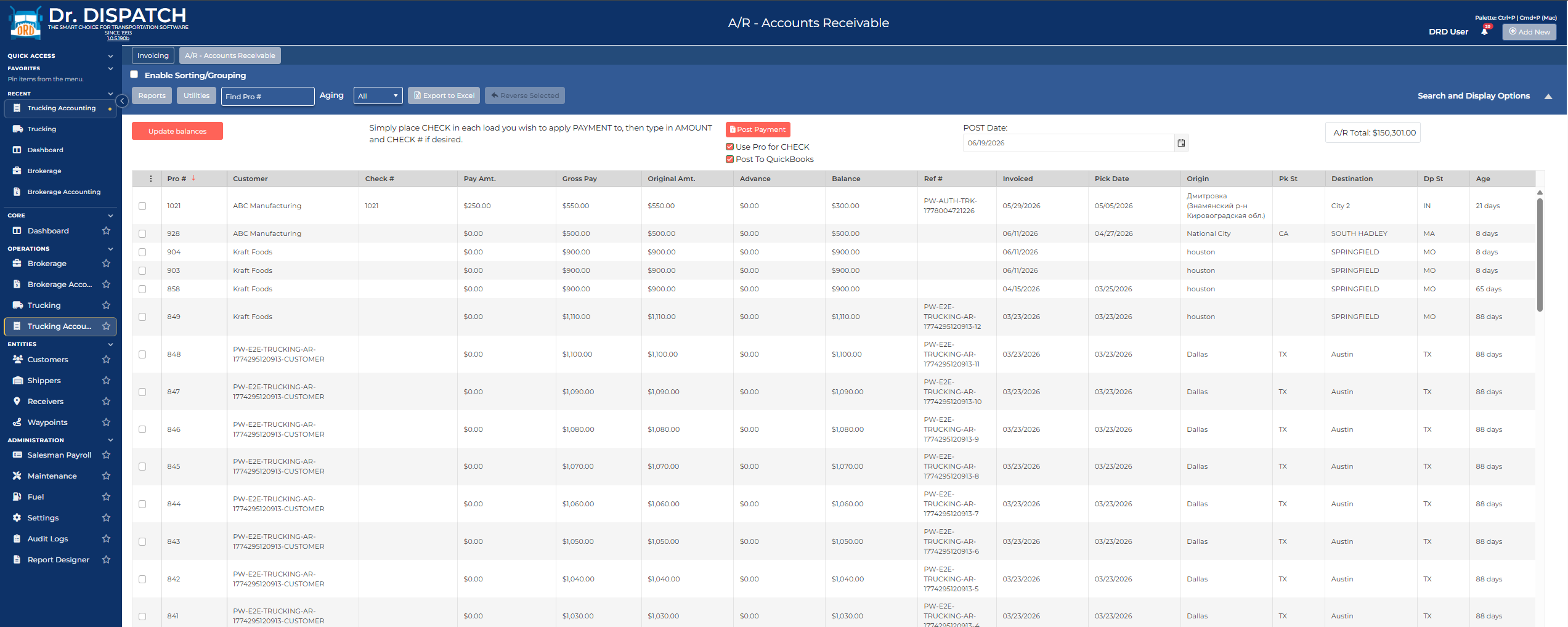
If QuickBooks paid-status tools are enabled, you may also see buttons to Update paid status or Update balances. Use those when you need DrDispatch to refresh payment or balance information from QuickBooks.
Review Driver or Fleet Owner Payroll
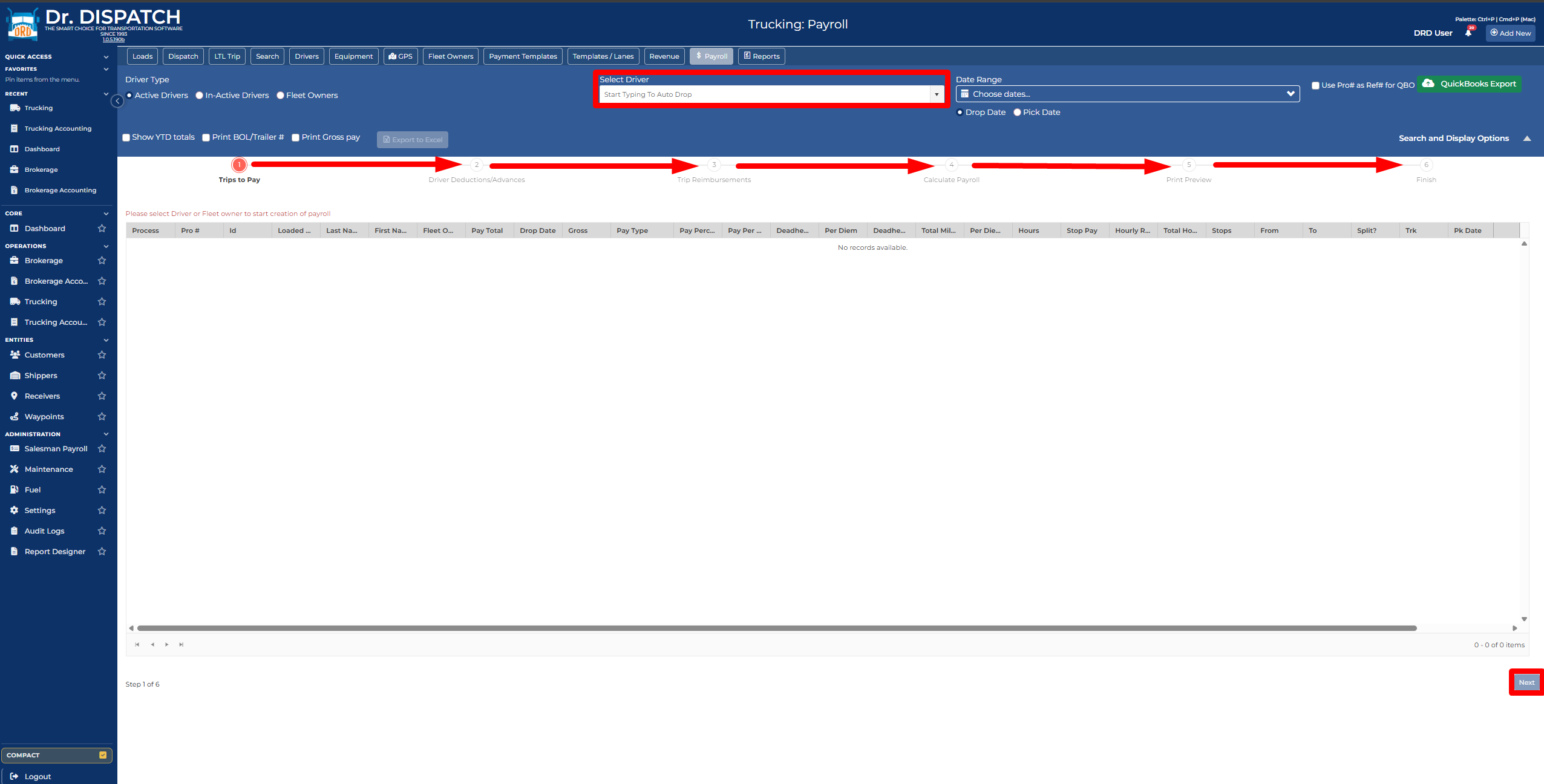
After loads are ready for pay, use Trucking > Payroll.
- Go to Trucking > Payroll.
- Choose whether you are working with drivers or fleet owners.
- Select the driver or fleet owner.
- Review the pending payments grid.
- Check the Process box for the payments that should be included.
- Add or review advances and expenses if your workflow uses them.
- Review the settlement preview.
- Click Create Settlement.
- Print or email the settlement as needed.
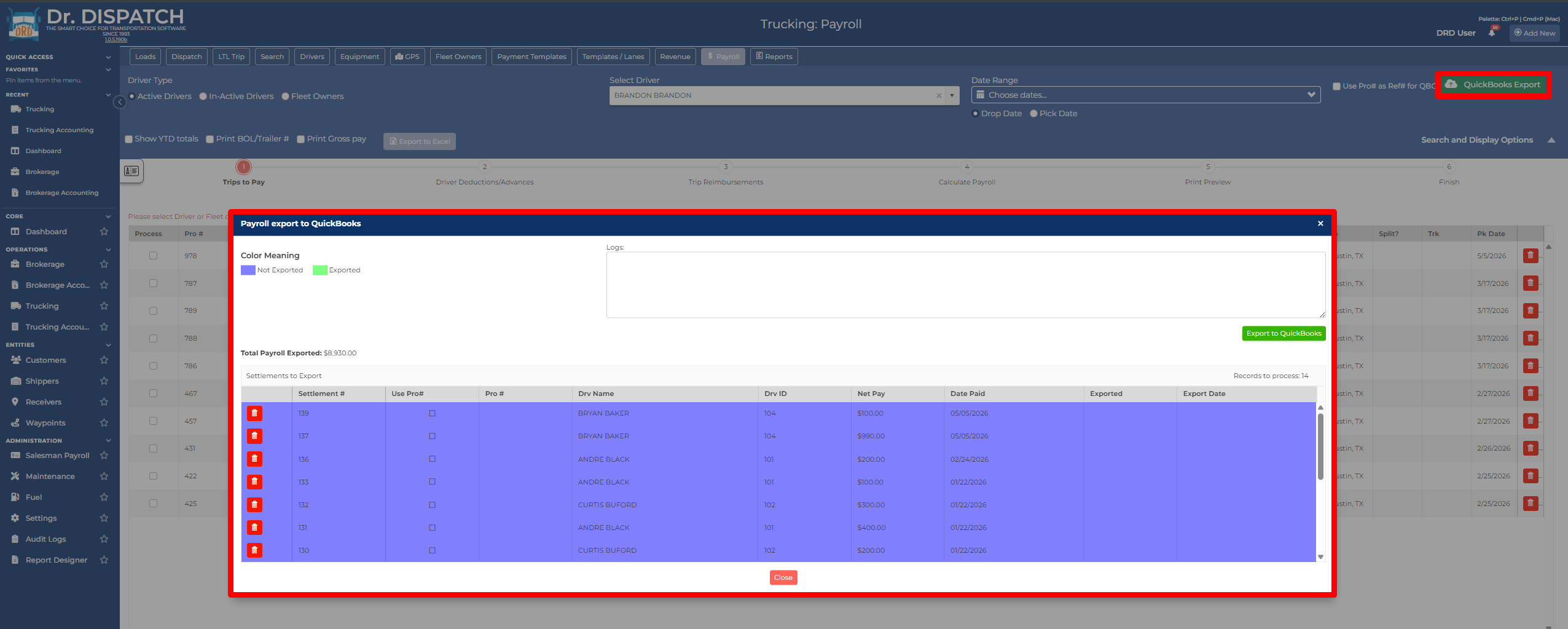
- If QuickBooks is active, use QuickBooks Export to export settlements.
- Driver payment behavior depends on trucking preferences and payment templates.
- If a load is missing from payroll, check the load status, driver assignment, payroll dates, driver pay setup, and whether pay has already been settled.
- Some companies calculate driver pay automatically when loads reach a configured status. Others calculate or review pay manually.
Find Past Trucking Invoices and Payments
Use the trucking accounting screens and reports to look up invoiced and paid loads. The A/R grid shows invoice date, balance, last payment amount, check number, and customer paid status.
Utilities
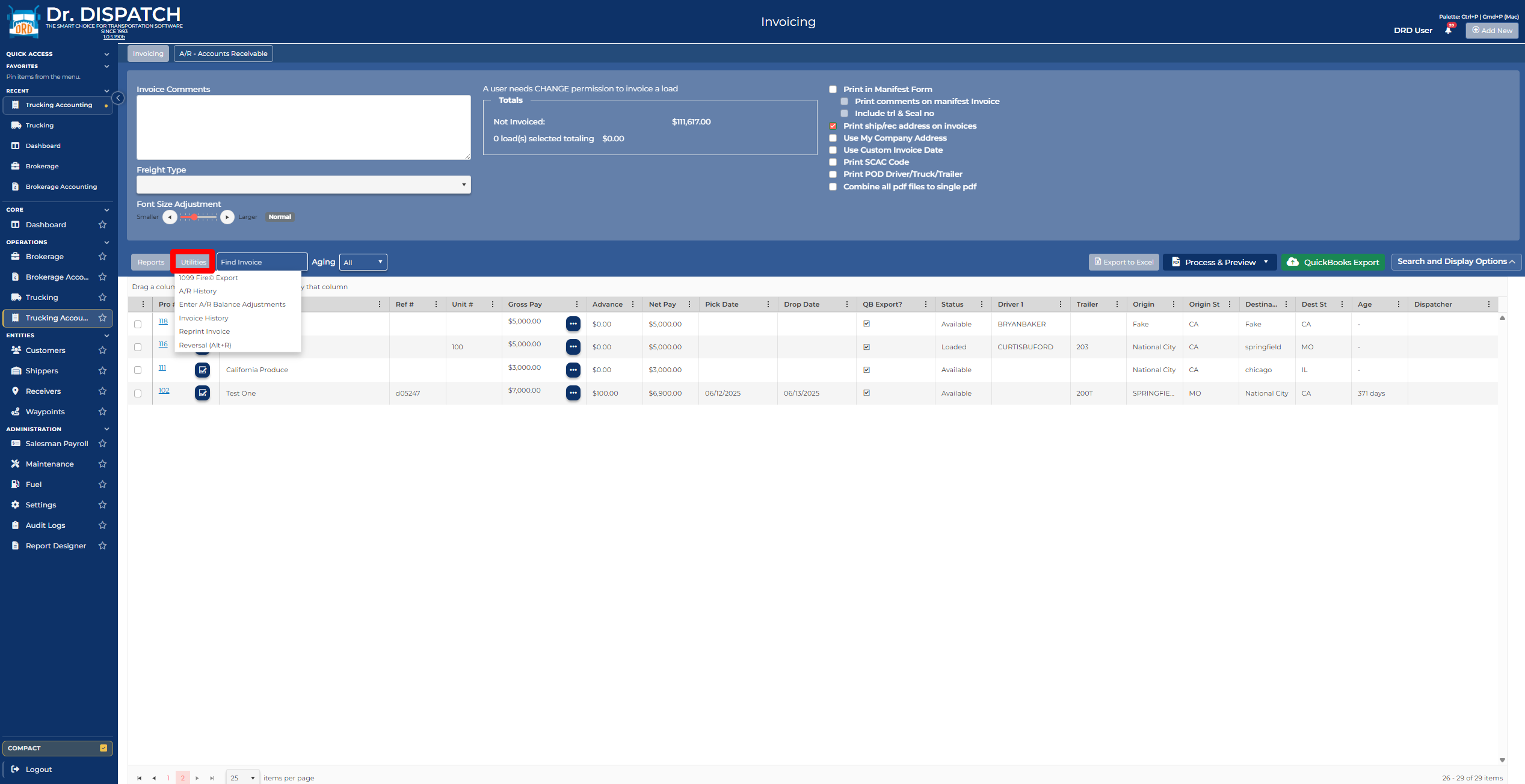
Use Utilities if you want to see the history, reprint invoice or reverse an invoice
- 1099 Fire Export
- A/R History
- Enter A/R Balance Adjustments
- Invoice History
- Reprint Invoice
- Reversal (Alt +R)
Common Questions
Why can I not dispatch the load?
The load usually needs to be Assigned first. It may also need a driver, customer, gross pay, customer reference number, QuickBooks class, and pickup/drop information depending on your settings.
Why does my load not show up in Invoicing?
Check the load status, customer rate, gross pay, customer, billing address, and company setting for whether only closed loads can be invoiced.
Why does my load not show up in Payroll?
Check the driver assignment, pay type or payment template, payroll dates, load status, and whether the payment has already been processed or settled.
When should I use Drop Loaded or Docked?
Use Drop Loaded and Docked only if those statuses match your operation, such as drop trailer, split load, or cross-dock workflows. For a simple truckload, many users move from Dispatched to Loaded, then Empty, then Closed.
Can I process several loads at once?
Yes. In invoicing and A/R, you can select multiple loads for invoice processing or payment posting. Payroll also lets you select multiple pending driver or fleet owner payments to include in a settlement.